How to Spec a Chartplotter Suite for Private Bahamas Anchorages
Some destinations reward speed. The best private anchorages reward interpretation.
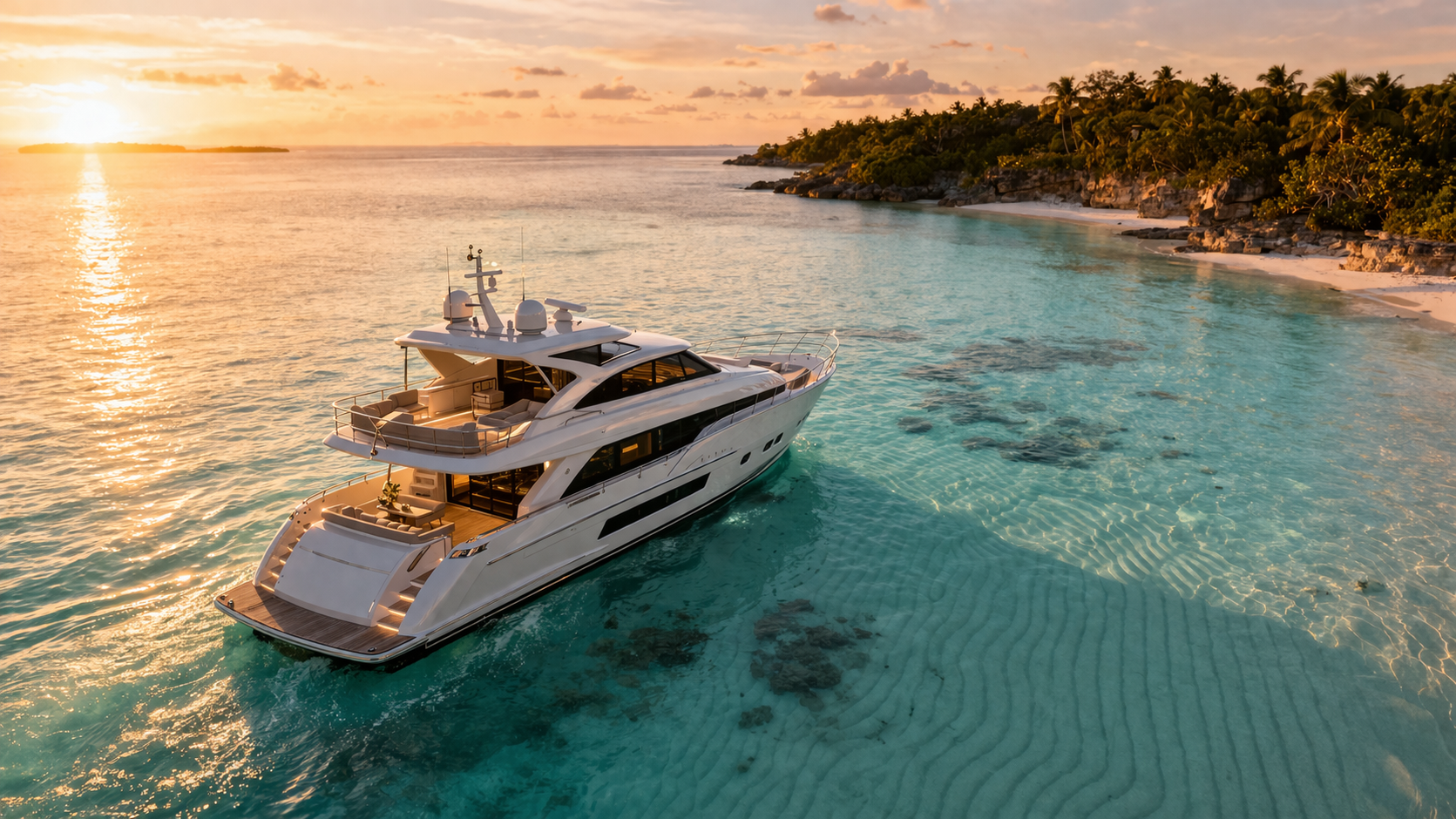
That distinction becomes obvious in the Exumas. IYC describes the Exuma chain as a string of over 365 islands and cays, full of secluded anchorages and remote islets, with turquoise water and an island-hopping rhythm that feels almost designed for a yacht with range, patience, and a well-specified helm. In terrain like that, the real luxury is not arriving with the biggest display on the dock. It is arriving with a charting environment that makes shallow structure, approach lines, and overnight security feel legible before the anchor ever touches bottom. (IYC)
The right helm for a private anchorage begins below the waterline
In places like the Bahamas, the captain is rarely solving a deep-water navigation problem. More often, the challenge is reading pale sand, darker cuts, shoaling contours, and the subtle geometry of a protected approach. That is why premium cartography matters more here than brute screen size alone. Garmin’s charting catalog says its premium mapping layer adds high-resolution satellite imagery, high-resolution relief shading, 3D views, aerial photos, and daily updates; Garmin also says the satellite layer provides a more realistic view of surroundings for entering unfamiliar harbors or ports, while relief shading gives an easier-to-interpret view of bottom structure than contour lines alone. (Garmin Support)
That combination is especially useful in private-anchorage cruising because it lets the helm work in layers. Official chart data gives the legal and navigational backbone; relief shading helps the captain understand how the bottom is shaped; aerial and satellite context help reconcile what the chart suggests with what the eye sees through the windscreen. No digital layer replaces prudent pilotage, but in anchorages where the water itself can be visually deceptive, that layered view shortens the distance between uncertainty and confidence. That is an inference from the charting features Garmin describes, but it is exactly the kind of advantage a well-specified luxury helm should deliver.
Premium charting is not only a Garmin story
Raymarine’s charting philosophy reaches the same conclusion from a slightly different direction. Raymarine says LightHouse Charts GEN 2 is built from official hydrographic chart sources, with faster redraw speeds, expanded coverage, and easier updates, while its broader LightHouse materials emphasize readability, intuitive navigation, and chart styles matched to different times of day. Raymarine also says LightHouse Premium adds high-resolution satellite aerial overlays, data-rich points of interest, and regular chart updates. For a yacht that divides time between refined marinas and secluded anchorages, that matters because chart clarity is no longer just about legal accuracy; it is about how effortlessly the captain can read the scene. (Raymarine)
In practice, that means the best private-anchorage setup is rarely a generic base chart on a large display. It is a chartplotter ecosystem that pairs official hydrographic data with premium visual context. If Garmin’s strength is the graphical richness of satellite imagery, aerial photos, and relief shading, Raymarine’s strength is the way its LightHouse environment combines professional-source charting with readable presentation and premium overlays. For a client, the important decision is not which brochure looks better. It is which visual logic best suits the way they approach shallow, high-value cruising grounds. That is an inference from the Garmin and Raymarine charting materials above.
Display architecture matters more than most owners expect
A refined anchorage helm also has to survive lighting transitions gracefully. The most important minutes are often not midday under full sun, but the last approach at blue hour, the quiet recheck after the hook is set, and the early-morning glance before the yacht gets underway again. Raymarine’s Axiom 2 XL is explicitly positioned for premier glass-bridge helms, with 16-, 19-, 22-, and 24-inch display options, expanded networking, and centralized control. Raymarine also says the displays use ultra-bright HydroTough screens for strong sunlight visibility, while an ambient light sensor automatically adjusts brightness for day and evening conditions. (Raymarine)
That is not merely a comfort feature. On a yacht that moves between exposed passages and quiet coves, a display that remains readable in hard daylight but becomes visually disciplined in the evening is part of the luxury proposition. The finest glass bridges do not shout after sunset. They recede into calm, giving the captain just enough information with as little visual fatigue as possible. That conclusion is an inference, but it follows directly from Raymarine’s emphasis on sunlight visibility, smart backlighting, and elegant glass-bridge integration. (Raymarine)
The anchor watch should live inside the helm
Many owners still treat anchoring as if it begins once the engine comes out of gear. On a serious modern helm, anchoring should be part of the charting workflow itself.
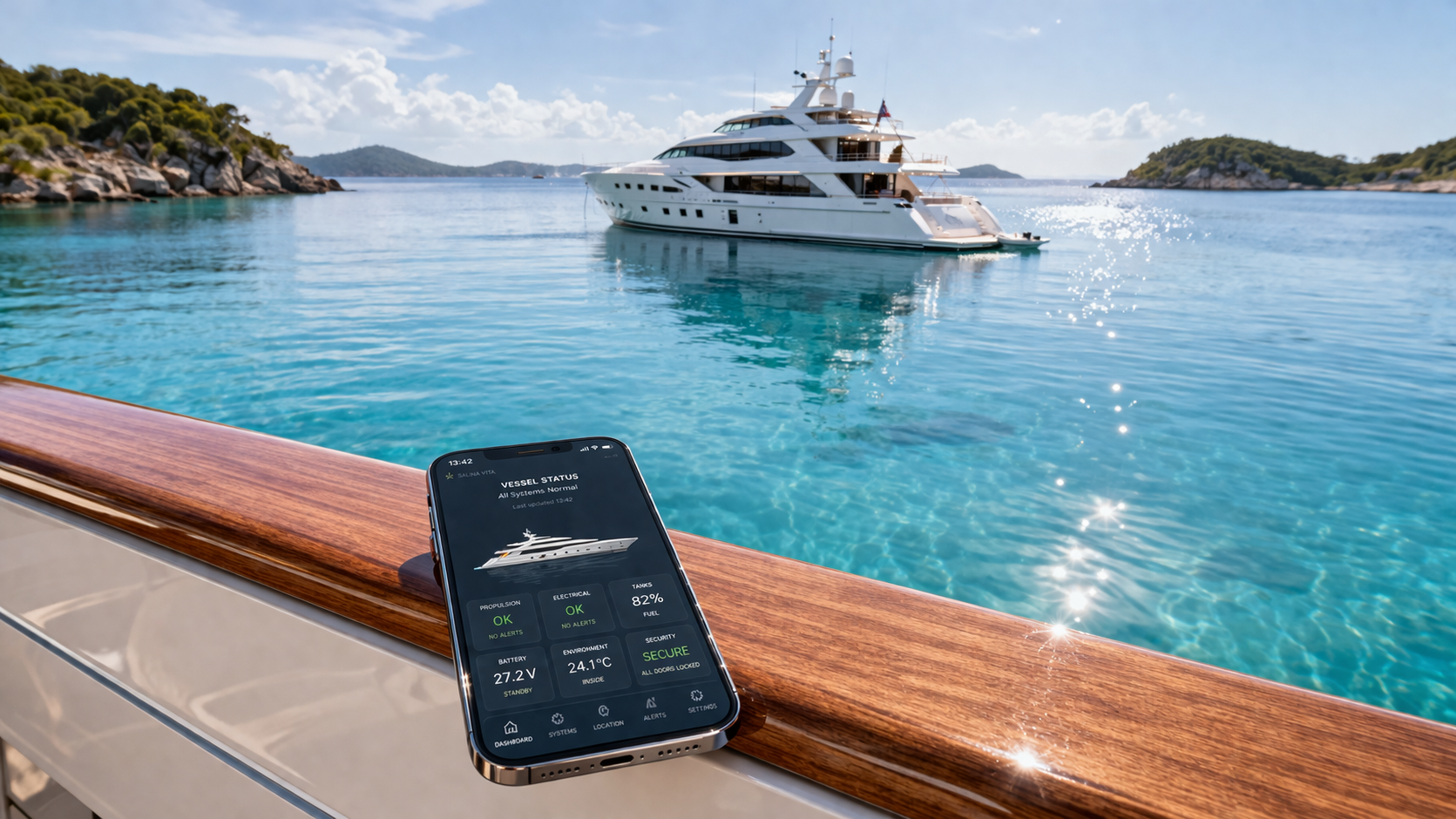
Raymarine’s LightHouse 4.9 Anchor Mode is a strong example of what that looks like. Raymarine says the feature uses the vessel’s GNSS position to record the location when the anchor hits bottom, automatically calculates swing and drag circles, and can alert the operator if the yacht is dragging. It also adds on-screen controls to fine-tune anchor depth, length of chain, and the recorded anchor position. In other words, the chartplotter stops being only an approach tool and becomes part of the yacht’s overnight security layer. (Raymarine)
That shift matters most in remote anchorages because the emotional value of seclusion depends on confidence. The owner does not want to enjoy a quiet dinner in a protected cove while wondering whether the boat is slowly walking out of position. A premium private-anchorage helm should therefore connect the full sequence: approach, set, confirm, monitor, and sleep. When anchor-watch logic is integrated into the same glass-bridge environment that handled the arrival, the vessel feels less like it is being “managed” and more like it is being calmly overseen. That is an inference from Raymarine’s Anchor Mode capabilities, but it is exactly the outcome those capabilities are designed to support. (Raymarine)
A private-anchorage helm is still a full yacht system
The final mistake is to think of the anchorage helm as a chartplotter-only problem. Raymarine says Axiom 2 XL is designed to integrate radar, sonar modules, autopilot, thermal, video cameras, NMEA 2000 devices, and remote keypad options into one glass-bridge architecture. That matters because the most elegant private-anchorage setups are never isolated. A chartplotter may be the primary interface, but the real luxury comes from how neatly it sits inside a larger system: radar available for a late arrival, sonar or sounder information during a shallow approach, remote keypad access when the sea state is up, and night-view discipline when the yacht is settled in. (Raymarine)
That is what Salina Vita means by a private-anchorage helm. Not a bigger box. Not a louder dashboard. A quieter, more intelligent command environment built around how a yacht is actually used in the places that matter most—those last, careful minutes before the boat disappears into a cove and the evening begins. The Exumas, with their many remote islets and secluded anchorages, are the perfect reminder that the most luxurious marine technology is rarely the most theatrical. It is the technology that makes difficult water feel composed. (IYC)
What we would recommend at Salina Vita
For a client planning serious Bahamas cruising, we would not begin with brand loyalty alone. We would begin with the anchorage profile. How shallow are the destinations? How often does the yacht arrive late in the day? Does the owner want relief shading and satellite context as a primary navigational aid, or a more restrained chart presentation with premium overlays and strong anchor-mode integration? Does the helm need a compact premium display, or a true glass-bridge screen architecture that turns charting into the visual center of the yacht? Those are the questions that produce a refined answer. They are also the questions that keep an expensive electronics purchase from becoming an oversized display with an underspecified purpose.
The quiet luxury of a well-specified yacht is that it makes arrival feel unhurried. In the right anchorage, that feeling is everything.
Share:
Best Autopilot for an Outboard Center Console?
Tender Safety Electronics for Yachts at Anchor